ResourcesTeamPricingContact sales

The data center industry is at a breaking point. For decades, the formula was straightforward: secure cheap land, hook up to the power grid, and build. That playbook is now obsolete. Surging AI demand is pushing developers beyond traditional terrestrial limits—and straight into orbit.
Power is the primary crisis. Interconnection queues drag on for years, transmission upgrades can take a decade, and utilities are growing reluctant to allocate capacity for hyperscale campuses. AI-driven demand doubles roughly every 18 months, yet a single large AI data center can consume as much electricity annually as 100,000 households. According to the International Energy Agency, global data center electricity consumption is projected to nearly double by 2030, reaching close to 945 terawatt-hours, which is roughly equivalent to Japan’s entire annual electricity use.
Land is a secondary headache. Zoning fights, noise complaints from cooling systems and generators, NIMBY opposition, and lengthy tax negotiations delay projects by years. Prime sites near substations and fiber are scarce. In drought-prone areas, water-hungry evaporative cooling has become a political flashpoint. Traditional site selection tools are exhausted.
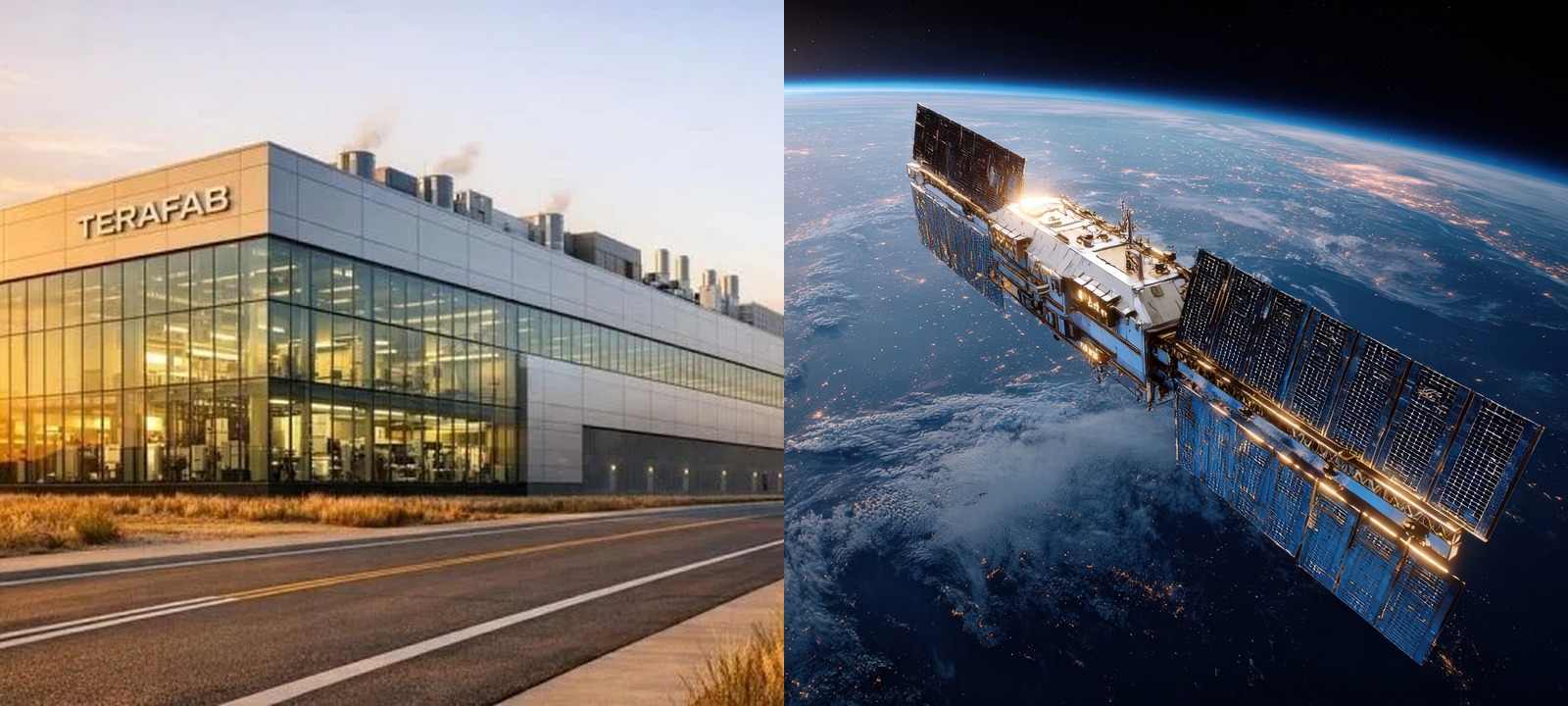
Space-based data centers offer a radical workaround. Companies are working to launch clusters of GPUs (Graphics Processing Units) — the specialized processors that power AI and installed in server racks — into low Earth orbit, transforming satellites into floating server farms. These orbital facilities would operate in dawn-dusk sun-synchronous orbits, bathed in near-constant sunlight. Massive solar arrays could deliver abundant, free power. Heat rejection relies on a relatively elegant approach: closed-loop liquid cooling transfers thermal energy to large radiator panels that radiate it into the vacuum of space. This means no fans, no water, and no grid required.
That said, the reality of scaling this passive cooling approach beyond the megawatt level remains a significant engineering challenge. Because of this, the technology is still in the demonstration phase.
AI tokens have not yet been processed at commercial scale in orbit. The vision is becoming more clear though: queries uploaded from Earth would run inference (generating answers) on onboard processing units, with only the finished output returning to the ground. This edge-computing model would slash bandwidth demands and enable near-real-time decisions, especially valuable for satellite imagery and latency-sensitive applications.
The momentum is building. Starcloud has launched early tech demonstrators with NVIDIA H100s, while SpaceX/xAI and Google are advancing satellite constellations linked by high-speed laser communications. SpaceX is particularly well-positioned — Starlink satellites already carry meaningful onboard processing, giving them a strong platform for dedicated compute payloads. The economics of orbital data centers likely close meaningfully once Starship drives launch costs down further, but it remains a close-run thing as it is extremely uncertain and the winner or final result will be decided by a very narrow margin.
Challenges of radiation hardening, orbital maintenance, launch economics, and scaling heat rejection are real. Still, the prospect of clean, unconstrained power and escaping the permitting and grid gridlock on Earth is compelling.
Larger and more capable demonstrators are expected in the coming years, with commercial orbital compute potentially arriving by the end of the decade.
This shift forces CRE professionals to rethink strategy. Site control now trumps price: parcels with deliverable megawatts, fiber access, and realistic entitlements win. Proximity to transmission, substations, or retired power plants dramatically boosts valuations. Brownfields and obsolete retail are finding new life.
Long-term leases with creditworthy tenants become premium currency. Developers no longer need giant, perfectly rectangular plots with lots of extra land for the substation. They can now build data centers on smaller parcels or oddly shaped sites (like narrow strips, L-shaped lots, or awkward brownfields) that previously couldn’t accommodate the power infrastructure. This makes more land usable.
Texas illustrates the playbook. SpaceX’s proposed Terafab in Grimes County—a massive chip manufacturing and AI computing facility near College Station—could reach $119 billion in investment. Structured off the ERCOT grid with on-site natural gas generation, it secured a 100% property tax abatement in exchange for jobs and payments. This self-contained, locally negotiated model signals where large-scale development is heading.
The race for AI compute is reshaping real estate from dirt to orbit. CRE players who adapt fastest will capture the biggest opportunities.