ResourcesTeamPricingContact sales

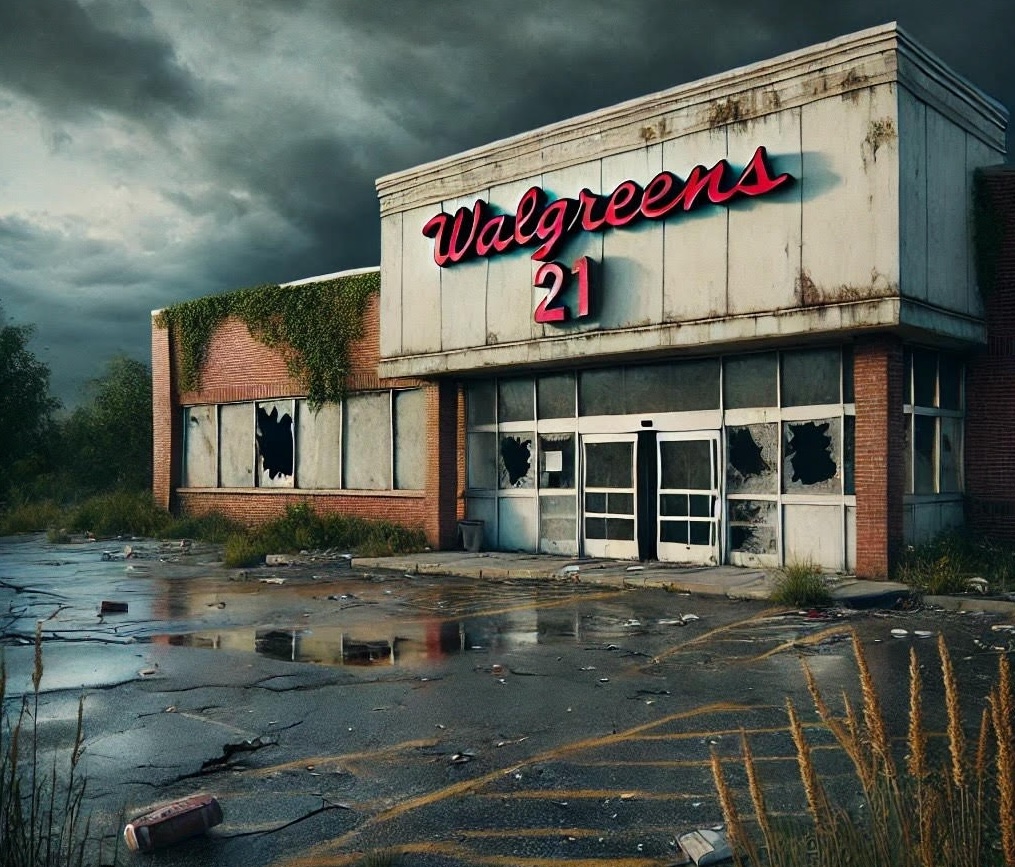
Historically, drugstore real estate assets have been considered some of the safest properties in the net leased marketplace. Walgreens had been the king of this mountain for decades. Walgreens was renowned for its conservative financial management, known for operating with little to no debt on its balance sheet.
The acquisition of Duane Reade in April 2010, in which Walgreens assumed $457 million of Duane Reade’s existing debt, marked a shift in Walgreens' strategy as they began leveraging debt to finance growth through acquisitions. The inclusion of Duane Reade's debt led to Walgreens' first-ever credit rating downgrade by ratings agencies.
Further complicating matters was the dispute and failed negotiations with one of the nation’s largest pharmacy benefit managers, Express Scripts. Walgreens overplayed their hand and soon figured out that they didn’t have the leverage they thought and ended up being kicked out of Express Scripts’ network.
In the years that followed, Walgreens continued to pursue growth through strategic acquisitions, including the full purchase of Alliance Boots in 2014, which pushed debt levels to $16 billion. Walgreens has also faced major headwinds from rising labor costs, increased debt service costs, and opioid lawsuit settlements.
At its peak in the mid-2000's, Walgreens boasted a market cap of over $100 billion and a credit rating of A+ from Standard & Poor's (S&P) and Aa3 from Moody's. As of March 7, 2025, Walgreens’ credit rating plummeted to BB- (S&P) and Ba3 (Moody’s), both of which are considered below investment grade. How the mighty have fallen.
These long-term missteps culminated in Walgreens Boots Alliance entering into a definitive agreement to be acquired and taken private by Sycamore Partners for $11.45 per share in cash. The deal is valued at up to $23.7 billion consisting of $10 billion in cash (shareholder equity) and the assumption of Walgreens’ existing debt plus a potential contingent value of up to an additional $3 / share in future equity.
Looking back, it is clear that the Duane Reade acquisition marked a pivotal point in Walgreens' financial strategy, transitioning from a debt-averse approach to leveraging debt for expansion. While this facilitated rapid growth, it also introduced financial challenges that have influenced the company's trajectory in subsequent years.
Today, 70% of Americans live within 5 miles of a Walgreens store. This is about to change. Prior to the announcement of the acquisition by Sycamore Partners, Walgreens had announced the closure of 1,200 stores in the US. That’s a lot of store closures (over 14% of Walgreens’ total stores).
Walgreens has never been shy about closing underperforming stores. They closed most of their in-line junior anchor stores as the industry shifted towards a drive-thru concept. They tried a freestanding small-format double drive-thru concept that didn’t work and subsequently closed almost every one of those stores. They have closed several current prototype freestanding drive-thru stores which typically range in size from 13,000 - 15,000 square feet. The closure of 1,200 Walgreens stores represents approximately 16.8 million square feet of vacancy coming soon to neighborhoods across the US.
Walgreens are predominantly located on strong retail corridors, usually occupying hard corners - essentially the best of the best locations in any given market. This is good news for many Walgreens owners. These owners will generally have significant tenant interest should their buildings go dark. This is where the good news stops for most Walgreens owners. The bad news is more nuanced, and in actuality, potentially catastrophic for landlords. Quite frankly, the bad news is almost certainly catastrophic for a very large number of landlords.
One of the most important factors (outside of location) to consider when investing in commercial real estate property is replaceability of rent. Walgreens assets fail miserably on this metric. Investors have historically overlooked the inflated rents paid by Walgreens because of the perceived security provided by the long-term leases and A+ credit rating. Investors believed that if they bought a Walgreens with a 25 year lease, they would receive rent from Walgreens for the full 25 years, plus options should Walgreens elect to stay. This is the key reason why investors were also willing to accept leases with no increases throughout the entire term (which is absolutely crazy). In fact, many brokers marketed Walgreens properties as having 75 year leases, which is a nice (but profoundly incorrect) play on words due to the way the option language is drafted in Walgreens’ leases.
Nobody considered the possibility that Walgreens could just stop paying rent. Times change. I am not saying rent payments are about to stop across the board - far from it. It is, however, a distinct possibility for many Walgreens sites in the near future. Let me explain why I believe this to be the case.
It’s public knowledge that Walgreens has been struggling and is clamoring to cut costs. Closing 1,200 underperforming stores is just one step in that direction. Being taken private is yet another. Private Equity (PE) firms have a history of slashing costs and tearing companies to bits in search of yield (and PE fees). Big changes are coming at Walgreens. You can count on that.
In the past, if you owned a Walgreens and your store went dark, this would obviously be less than ideal. Nobody wants to own a dark drug store. Dark buildings are difficult to sell unless pricing is steeply discounted, and financing becomes extremely difficult - if not impossible. What you could rely on if your Walgreens went dark was receiving your rent payments for the duration of the lease or until such time as you found a suitable replacement tenant and/or alternative use and negotiated a buyout with Walgreens for the present value of the remaining rent payments. This would most likely make you generally whole. You were able to secure a new tenant and/or alternative use while maintaining rental income during the entitlement period and subsequently received a lump sum payment from Walgreens concurrently with the termination of the Walgreens lease and then handed the keys to the new tenant. That was a best case scenario outcome. Walgreens being acquired by Sycamore Partners changes all of that.
It is no secret that bankruptcy is a big part of the PE playbook. It’s a tale as old as the LBO. Should Sycamore Partners elect to file a Chapter 11 bankruptcy (reorganization) all Walgreens landlords should be very worried. All bets will be off. No more counting on rent payments for your dark Walgreens. Your lease will be rejected with absolute certainty. Think you have recourse? Think again. Landlords are basically third class citizens in the tenant bankruptcy pecking order.
In a bankruptcy reorganization, the tenant’s playbook is exactly the same every time (some of it dictated by bankruptcy laws). The tenant will hire a real estate firm that specializes in restructuring leases en masse. The agents at this firm will call all the landlords and threaten to terminate the lease if the landlord does not agree to modify the lease in the tenant’s favor on multiple fronts (the good news is that the person calling you absolutely does not have the authority to make the decision to terminate your lease). The requests will always include an ask for an extended reduction in rent (sometimes a period of free rent) and some request for an extension of the lease term, usually in the form of options (so the tenant is not obligated but you are).
Some landlords will fare better than others. Your outcome will be heavily influenced by the quality of your real estate (your leverage), your current rent compared to market rent (asset fundamentals), the strength of your negotiating skills, and your ability to hold a firm line in the face of catastrophe (your poker skills).
First of all, do not panic. Do not communicate any fear - ever. That is the kiss of death. You need to adjust your mindset and think of this process as a hunt for leverage. The person calling is thinking they most likely have you over a barrel.
How many tenants are in the market that need 14,000 square foot freestanding buildings with drive-thrus and are willing to pay $600,000+ / year in rent? The answer is three tenants (Walgreens, CVS, and Rite Aid). We can basically cross Rite Aid off that list, so that leaves two tenants, and one of them is threatening you. Not the best position from which to negotiate. But I have Dollar Tree, Boot Barn, and Dollar General calling me directly, you say? Ask them how much rent they are willing to pay. Based on rental data from DealGround, it will be less than 50% of what Walgreens is currently paying and in many cases much less. As an example, the highest rent we could find in our database for a Dollar Tree in the US is $298,000 / year and that site is in Southern California. The rents fall off quite significantly from there as you look across the country (many of the Dollar Tree leases have annual rents in the $100,000 - $150,000 range - ouch). Here are a few guidelines to help you navigate to the best possible outcome (these are merely generalizations as each case is unique and the specifics are important in finding your leverage - assuming you have any at all):
One thing that retail property investors can count on is change. Tenants come and go. Their concepts evolve and their prototypes can change significantly. In fact, CVS recently announced that they will commence opening smaller stores, each less than 5,000 square feet, focusing primarily on pharmacy services and health-related products. These stores will exclude typical retail items like groceries and greeting cards. This makes perfect sense as approximately 77% of sales come from the pharmacy (for both CVS and Walgreens) which typically only utilize approximately 20% of the total floor area in their current locations.
The major takeaway here is that core fundamentals matter more than anything. At the end of the day, when buying a commercial real estate property, the asset you are buying is land. Every single time. Tenants come and go. Buildings depreciate and fall apart. The land is the asset. The location is why a tenant will choose to lease from you. Land value is the most important factor in determining rent. You cannot rely on a tenant to sustain the residual value of your investment. You need to rely on the quality of your real estate to preserve that value.
Buying the best locations at or below market rents is the recipe for long-term security and investment success. Most Walgreens purchases, although many in great locations, are at rents that are simply not replaceable. Buying great real estate with massively over-market rent is still a bad investment. Don’t do it.
If you can’t answer “yes” to the question “Can I lease this property to a multitude of different tenants for the same or greater rent than the current tenant is paying now?” then you should not buy that property.
I have a couple tried and true philosophies that I have stood by for nearly three decades:
1) when you buy good real estate, good things happen; and
2) when the day comes that your tenant goes away do you want to have to pick up the phone and call tenants or do you want the tenants to pick up the phone and call you?
Buy good real estate with solid fundamentals and over time you will be rewarded handsomely.
Eliminating any fundamental criteria from your decision-making process merely invites undue risk and can lead to catastrophe.
Choose wisely.